Omnichannel AI Engagement Platform
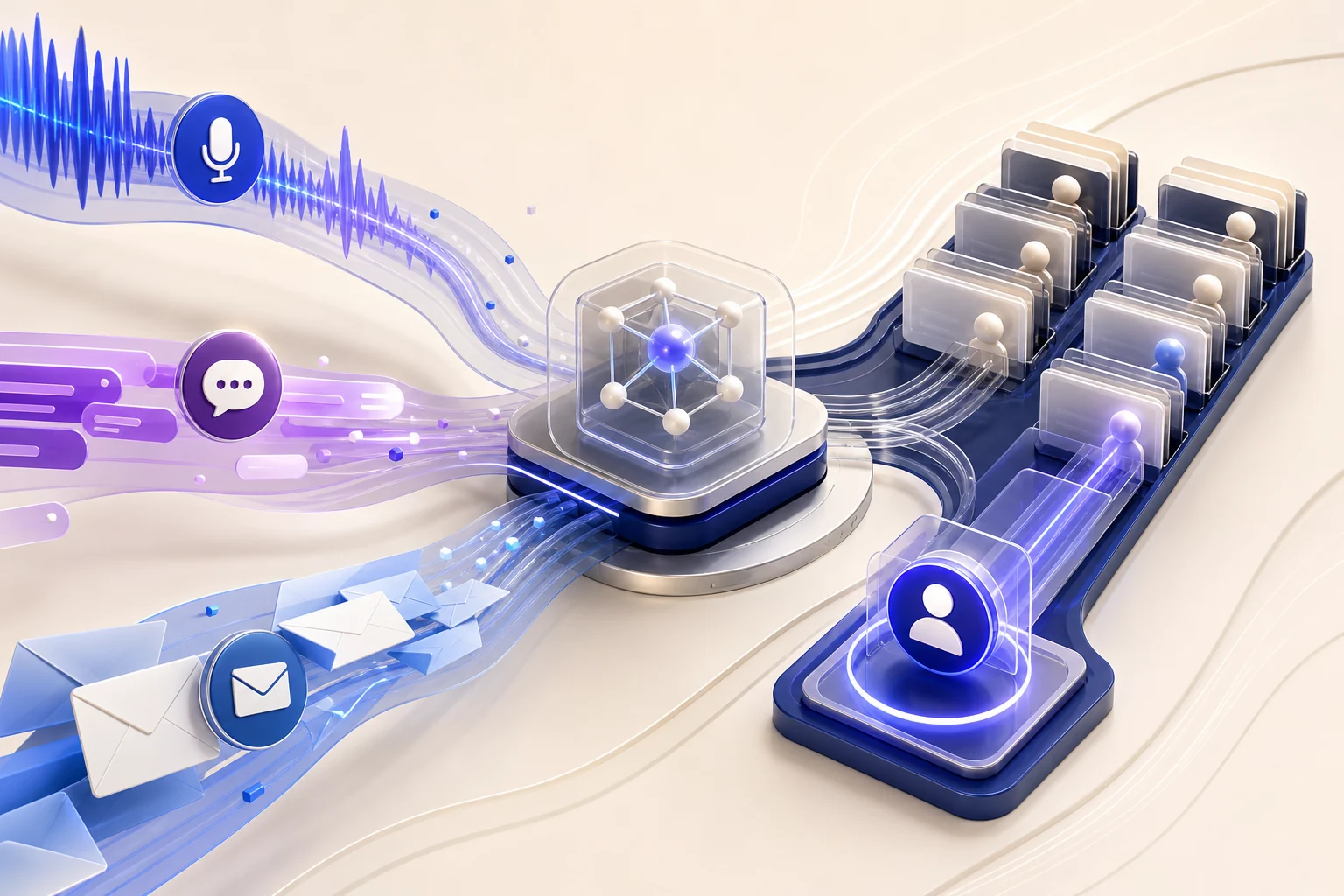
An inbound engagement system that turns voice, messaging, and email interactions into structured cases, routed workflows, compliant responses, and actionable operations data.
01 / The problem
What needs to change
Inbound conversations arrive through multiple channels and providers, but teams still need consistent extraction, routing, escalation, compliance handling, and operational visibility.
02 / The approach
A focused path through the complexity
The platform normalizes provider events into one model, applies configurable flow logic and AI extraction, creates durable cases, and exposes cost, delivery, failover, workload, and escalation signals.
03 / Key capabilities
What the system is designed to do
- Inbound voice, messaging, and email processing
- Provider routing, failover, and delivery analytics
- AI-assisted extraction and case creation
- Consent, opt-out, recording, transcript, and retention controls
- Flow builder, escalation policies, budgets, and operations dashboards
04 / Architecture
Technology and system shape
- TypeScript service with a canonical inbound event model
- Provider adapter layer for resilient channel routing
- Versioned flow DSL with immutable publish and rollback semantics
- Tenant-scoped CRM, case, usage, and audit persistence
- Container and Azure deployment assets with repeatable load tests
05 / Results
What the repository demonstrates
- The MVP covers the full path from inbound webhook through extraction, routing, response, case operations, analytics, and retention.
- Compliance and non-critical budget controls are enforced in the same runtime that handles provider failover.
06 / Lessons
What the work teaches
- Omnichannel AI needs a canonical interaction model before it needs more channel-specific features.
- Failover quality, consent, cost, and escalation need first-class telemetry to remain operable.
07 / Screenshots
Approved visuals
No public screenshots yet
Add only approved screenshots to the project record.